Regional Wines
They originate from high-quality, characterful, and traditional vineyards such as the Wiener Nussberg or a cadastral municipality such as Grinzing.
Nussberg
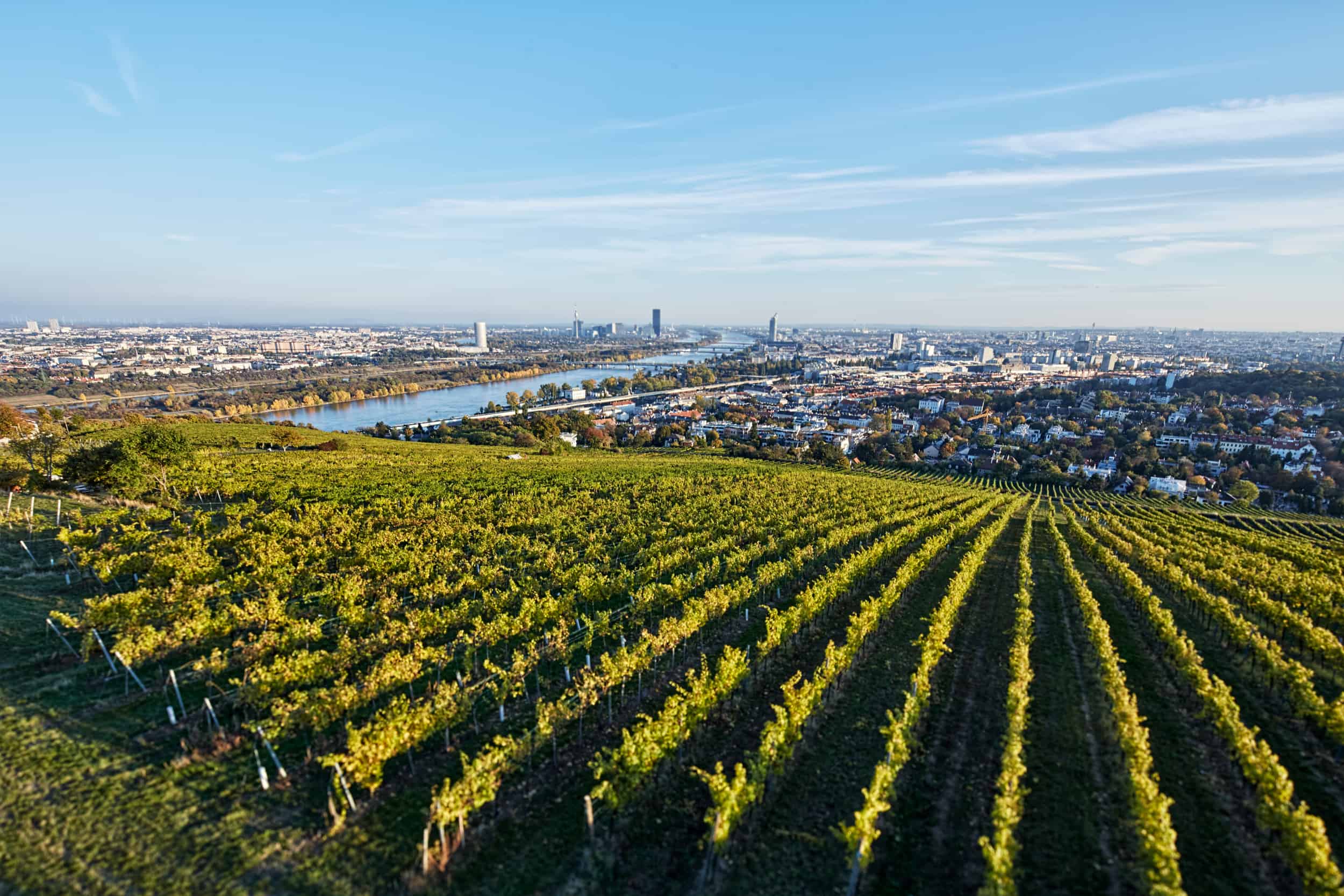
Once called Weingebirg – Vienna’s premier site, the Wiener Nussberg.
The southern slope and limestone-rich soils provide perfect conditions for Riesling, Gemischter Satz, and Burgundy varieties.
The diversity of grape varieties results from the Heuriger tradition and the significant geological differences on the Nussberg. The limestone content varies between 25% and 65% and combines with clay, loam, and sand.
Shells, once washed ashore by the sea, create a multi-layered minerality in the wines from the Nussberg.
The influence of the Vienna Woods and the Danube guarantees a perfect microclimate that has a cooling effect and thus shapes the important fruit aromas.
The Nussberg undoubtedly ranks among Austria’s top vineyard sites.
Wines: Nussberg – Riesling, Nussberg – Wiener Gemischter Satz DAC, Nussberg – Pinot Noir, Nussberg – Riesling Weißer Marmor
Grinzing
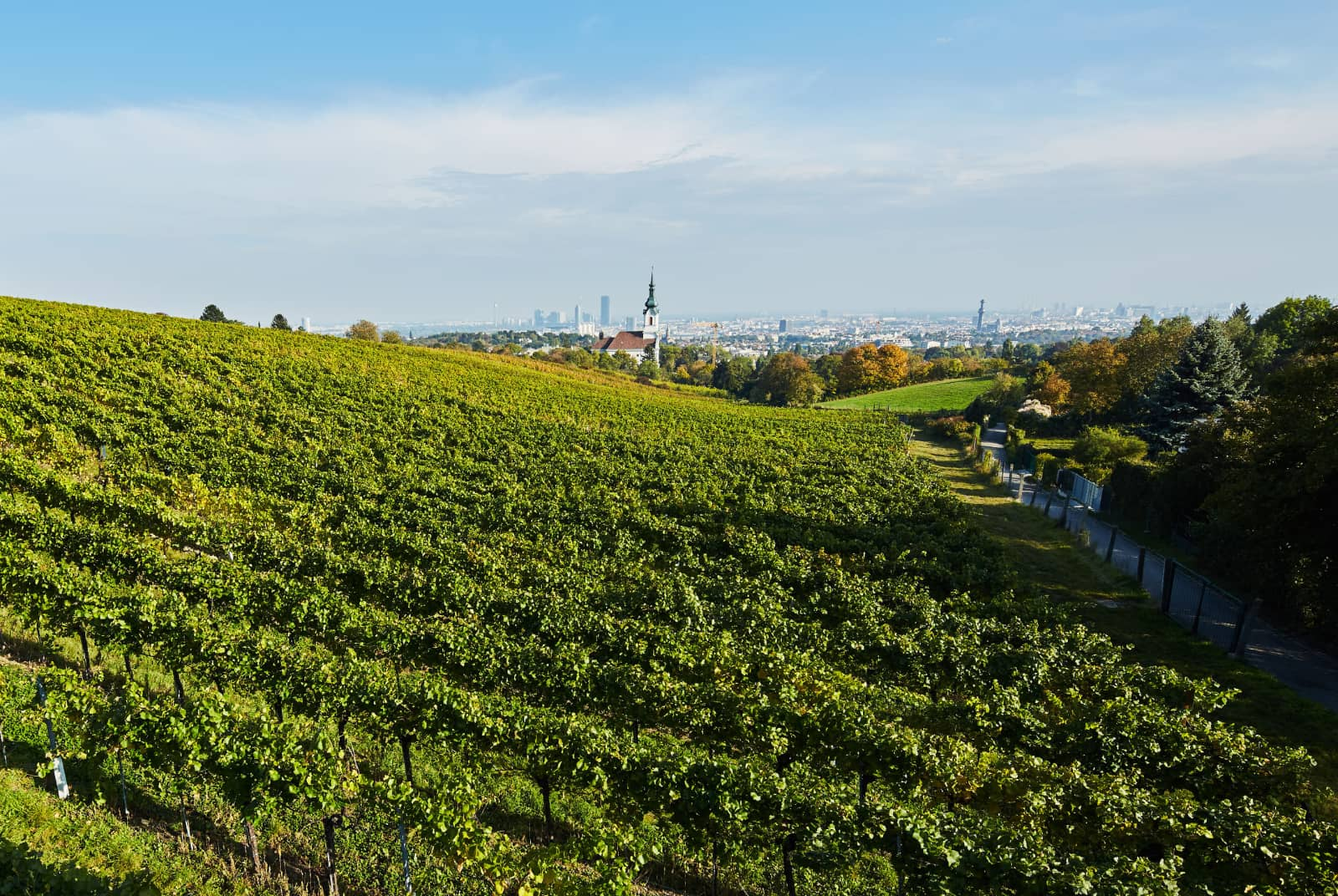
The vineyards for the Grüner Veltliner Grinzing are located in the immediate vicinity of the Kaasgraben Church with a southwestern exposure. The aroma development for this wine is therefore expressed in a cooler style.
The gravelly soils and the cooling influence of the Vienna Woods are ideal for spicy Grüner Veltliner, which can thereby perfectly preserve their typical peppery varietal character.
The ascent to the Bellevue Heights is already clearly noticeable here and makes manual cultivation unavoidable.
The Grüner Veltliner from this site is vinified medium-bodied to full-bodied, depending on the vintage.
Wines: Grinzing – Grüner Veltliner
Single Vineyard Wines
They originate exclusively from first-class vineyards with the resulting distinctive character.
Ried Alsegg
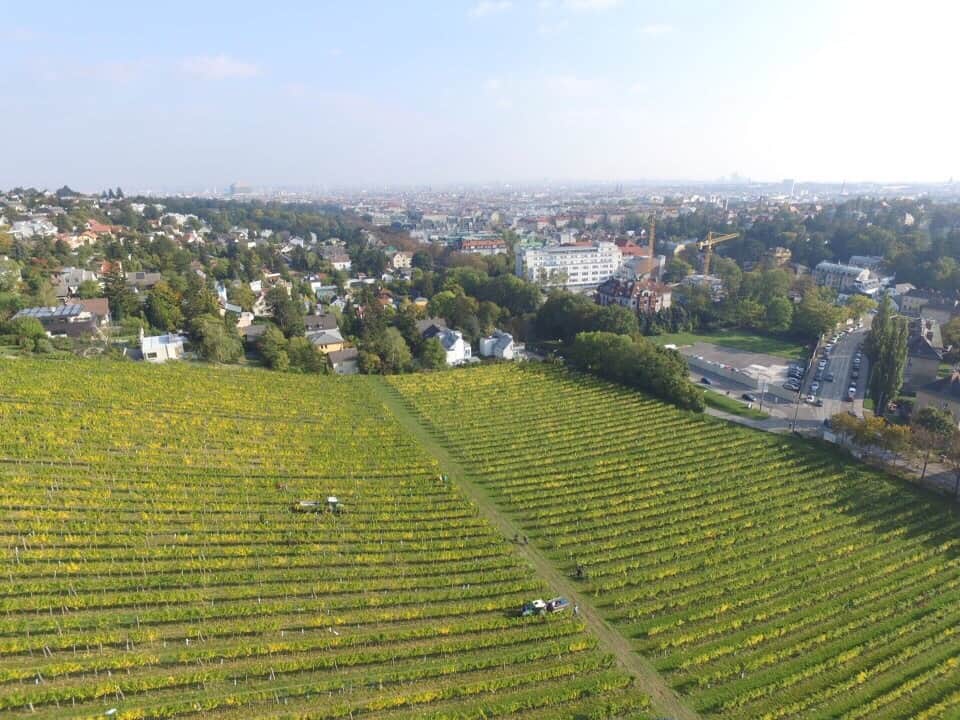
The Alsegg – the name derives from its location on the Alsbach – is one of the oldest documented sites in Austria.
This unique site is distinguished not only by its perfect southern exposure, but above all by its size – 8.3 hectares – in the midst of the densely populated 17th district.
Due to its sheltered location, the climate is protected from late frosts and strong winds. The early development allows the Riesling to ripen perfectly and develop a delicately fruity apricot aroma.
The homogeneous calcareous loam and loess soils have proven over centuries to be the ideal prerequisite for great wines.
Wines: Ried Alsegg-Hernals Riesling, Hernals – Sauvignon Blanc
Premier Cru Wines 
This vineyard classification stands for the very best sites (Premier Cru) of a wine region and applies only to grape varieties typical of the area.
Ried Preussen-Nussberg
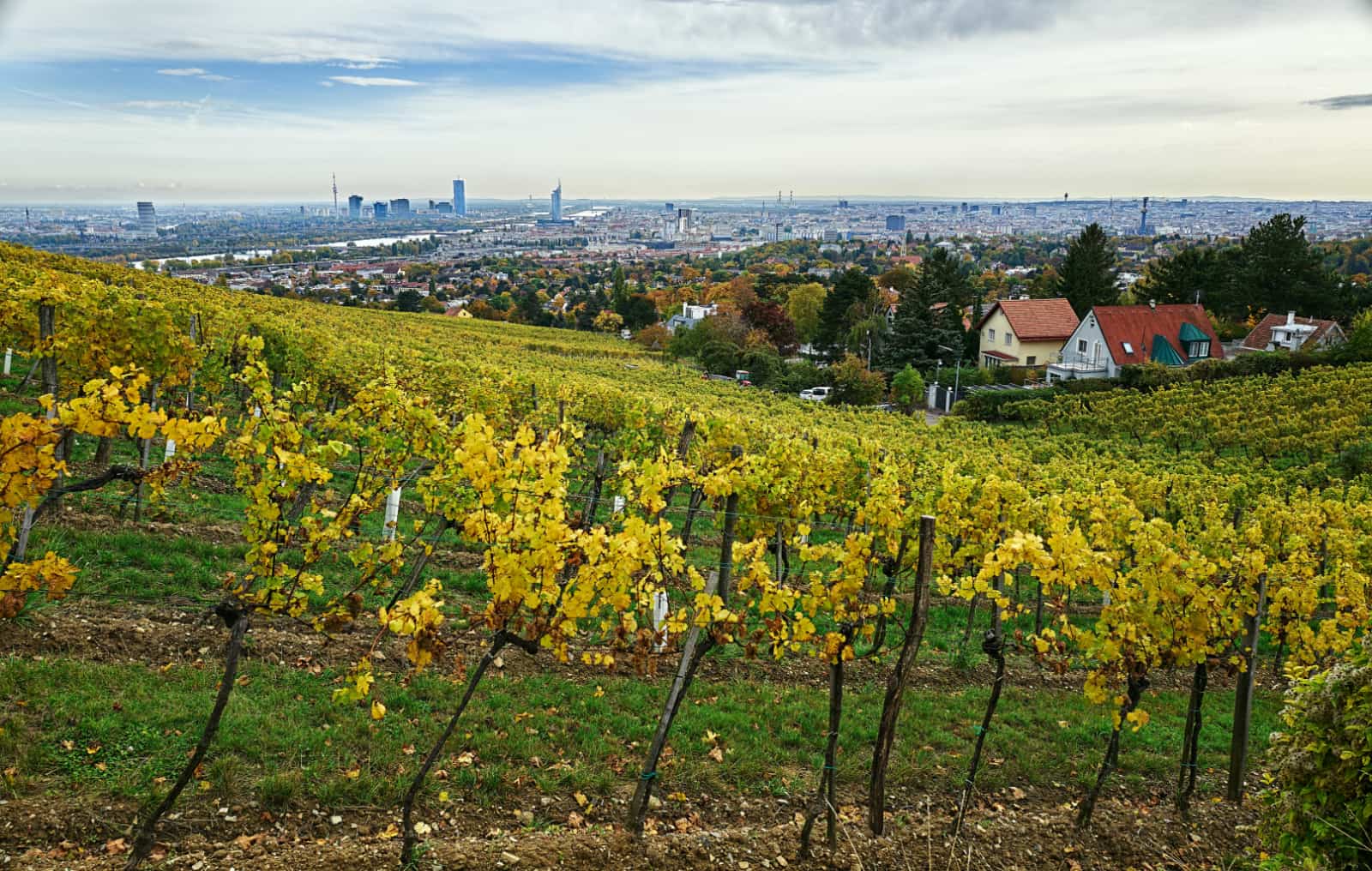
First documented in 1501, named after the royal councilor Heinrich Preussel – not after the Prussians, as is often mistakenly claimed.
The Preussen is located in the “Mittlere Schos” of the Nussberg grand cru site, which is divided into three terraces. In this south-facing “prime cut,” the limestone content of the
fossils and shells deposited millions of years ago is very high. The Preussen has always been considered a premier site on Vienna’s Nussberg and produces Riesling and Wiener Gemischter Satz in particular with incredible minerality and complexity.
Wines: Ried Preussen-Nussberg Erste Lage Riesling, Ried Preussen-Nussberg Erste Lage Wiener Gemischter Satz DAC
Ried Langteufel-Nussberg
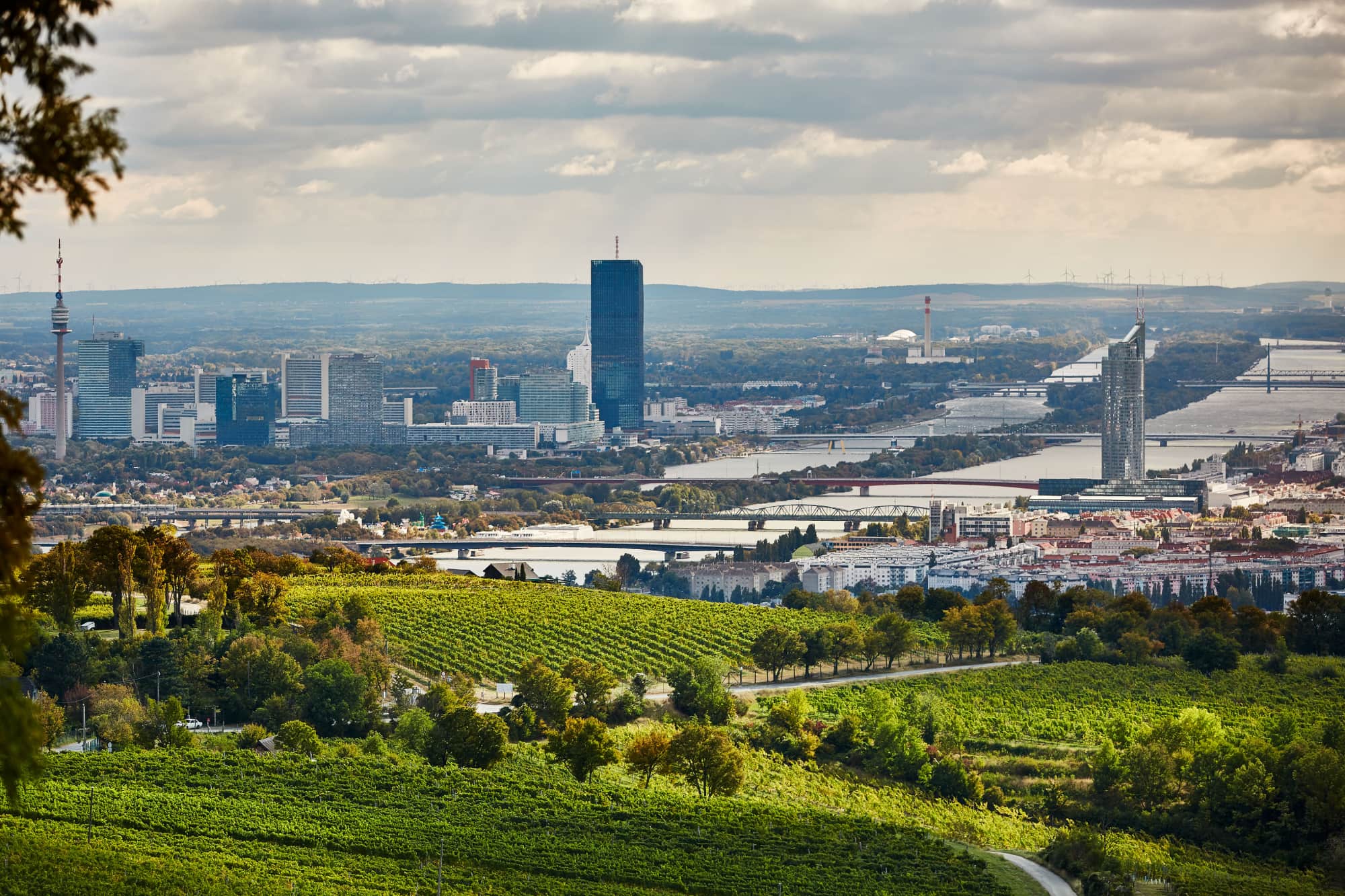
The single vineyard Langteufel is part of the Nussberg grand cru site. The name derives from the shape of the plot. The Ried Langteufel is a long, wedge-shaped site facing southwest that has always been very difficult to cultivate. The winegrowers would curse: “The long one is the devil.” This site was first documented in 1384 as “Langtewel am Nusper.”
The Ried Langteufel is not unlike the Preussen and is characterized by sandstone with a high quartz content and marine deposits.
Wines: Ried Langteufel-Nussberg Erste Lage Wiener Gemischter Satz DAC
Ried Schenkenberg-Grinzing
The vineyard designation is probably based on the ownership of a cupbearer family: The Kuenringer, who also had possessions in this area, were “Supreme Cupbearers.” The term Schenk derives from schenken in the meaning of pouring.
The 345 m high Schenkenberg is located in Obersievering and represents the southeastern slope of the Bellevue Heights. To the north and south, the site is bordered by two small streams that provide a cooler climate.
Geologically, the Schenkenberg lies as the northeastern foothills of the Eastern Alps in the Flysch zone, which is composed of sandstone, marl, and claystone.
The Schenkenberg was first documented as early as 1329. The site produces cool, very precise Grüner Veltliner.